
James writes to believers who need more than religious knowledge. They need the kind of faith that changes how they live, especially when life becomes difficult and their reactions are tested. His instruction in James 1:19 is familiar enough to be repeated as ordinary advice about communication, but the surrounding passage makes it considerably more demanding.
James 1:19 (NASB 1995)
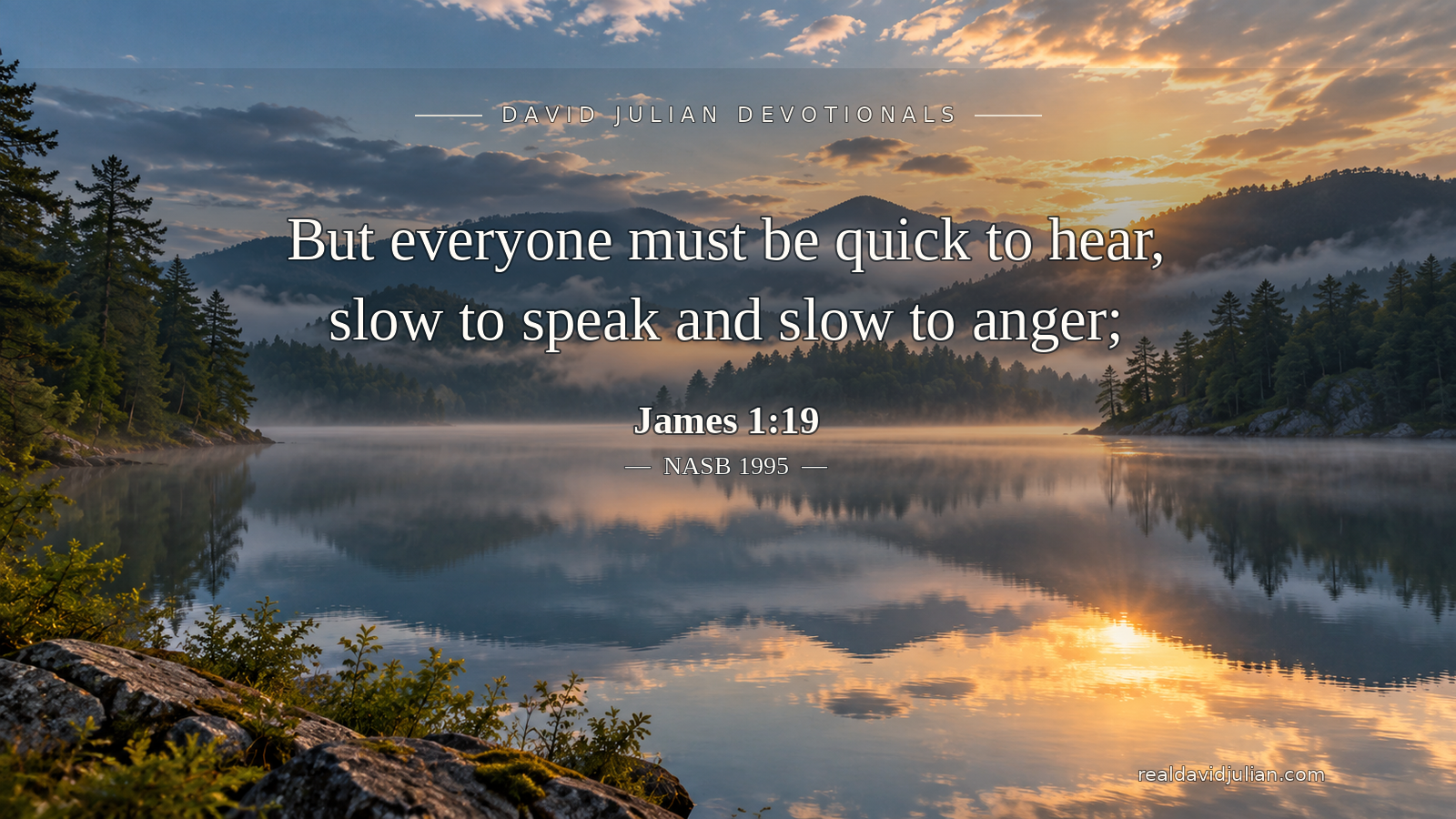
“But everyone must be quick to hear, slow to speak and slow to anger;”
James 1:19 (NASB 1995)
Listening begins with humility
The verse follows James’s reminder that God brought His people forth by the word of truth. It leads directly into the warning that human anger does not achieve God’s righteousness, followed by the command to receive the implanted Word with humility. James is concerned with how believers respond to God’s truth and what that response looks like in their conduct.
Being quick to hear requires more than allowing someone else to finish a sentence. It calls for a willingness to understand before judging and to receive correction before defending ourselves. That can be difficult when we believe we already know the answer. We may hear enough to prepare a rebuttal without ever seriously considering whether we have misunderstood the other person.
The discipline of speaking with restraint
Being slow to speak is equally demanding. Scripture does not prohibit firm convictions, honest disagreement, or speaking against wrongdoing. James himself is hardly reluctant to confront sin. His concern is speech governed by wisdom rather than impulse. Sometimes the responsible response is to speak plainly. Sometimes it is to ask another question, admit uncertainty, or remain silent until we understand the situation better.
When anger takes control
Then James addresses anger. His warning in the next verse is particularly important: the anger of man does not achieve the righteousness of God. People can become convinced that the intensity of their frustration proves the justice of their position. Yet a person may have a legitimate concern and still respond in a way that causes needless harm. Even a true argument can be delivered with pride, contempt, or impatience.
This does not mean all anger is morally identical. Scripture recognizes the seriousness of evil and injustice. But anger is not self-validating, and its force cannot substitute for discernment. James asks believers to examine what their anger produces, not merely what provoked it.
Receiving the Word and living it
The passage also reaches beyond disagreements with other people. James calls his readers to receive the Word in humility and then to become doers of that Word rather than hearers only. We can study Scripture carefully, explain its meaning, and defend its authority while resisting its correction in our own lives. Knowing what the Bible says is essential, but knowledge becomes self-deception when we treat obedience as someone else’s responsibility.
What faithful listening looks like
Consider how easily this happens in ordinary conversations. A family member says something we find unfair. Someone challenges a deeply held belief. A discussion becomes tense, and our attention shifts from understanding to winning. The temptation is to answer immediately, especially when we can assemble a persuasive response. James invites a different kind of discipline: listen carefully, examine your motives, and speak in a way consistent with the truth you claim to value.
None of this guarantees that conversations will become easy or that others will respond fairly. Listening patiently does not ensure agreement, and restrained speech does not prevent every conflict. The point is faithfulness in our own response, including when another person is unwilling to show the same restraint.
James ultimately directs attention toward the heart. A teachable person can hold strong convictions without assuming that every first reaction is trustworthy. Humility leaves room for God’s Word to challenge both our beliefs and the manner in which we express them. That is a demanding form of obedience, practiced in the conversations and decisions that make up an ordinary day.
Reflection
When disagreement arises, am I genuinely trying to understand and respond faithfully, or am I mainly preparing to defend myself?
Prayer
Father, teach us to receive Your Word with humility. Help us recognize when impatience, pride, or anger is shaping our speech. Give us discernment to know when to speak and when to listen, and courage to accept correction when we need it. Let our conduct reflect the truth we profess. In Jesus’ name, amen.