
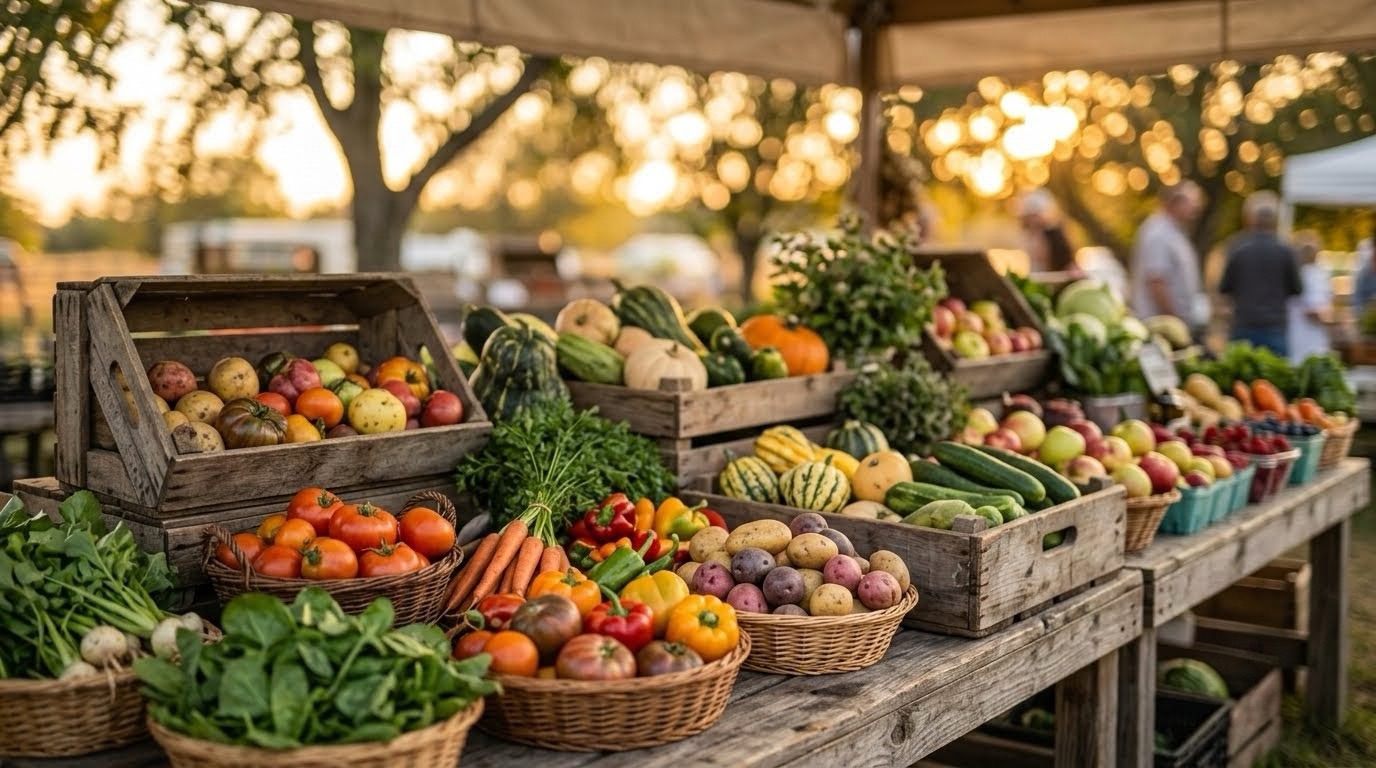
Part 1 of this series made the case that “man-made” isn’t automatically dangerous. This part makes the harder, less comfortable case in the other direction: “natural” and “grown in your own garden” aren’t automatically safe either, and the internet has become extremely good at turning a narrow, legitimate clinical concern into a blanket panic about an entire food group. Oxalates and nightshades are two of the clearest current examples. Both deserve a real answer, not a dismissal — and both are a useful place to practice a habit that matters far beyond the produce aisle: separating what the evidence actually shows from who benefits when you believe more than it shows.
In This Article
When a Real Concern Becomes a Blanket Panic
Spend any time in wellness spaces online and you’ll run into both claims within the same week: that spinach and almonds are quietly damaging your kidneys, and that tomatoes and potatoes are secretly driving your joint pain or autoimmune flare. Neither claim is pure fiction. Both have a real, narrow clinical basis. The problem is what happens between the narrow finding and the sweeping conclusion — and, often, who is standing at the end of that path selling you the fix.
The Oxalate Reality
Oxalates are naturally occurring compounds found in many plant foods, and roughly eight in ten kidney stones are made of calcium oxalate — so the underlying biology here is genuinely real, not invented. A large prospective study following nearly 240,000 participants across three major cohorts found that higher dietary oxalate intake was associated with a modestly elevated stone risk in men and in older women — roughly a 20 to 30 percent increase between the highest and lowest intake groups. That’s real, but it’s also worth sitting with what it doesn’t say: the same researchers concluded their data did not implicate dietary oxalate as a major risk factor for most people, and the association didn’t hold at all in younger women.
The practical picture is narrower still. Older research identified only eight foods that meaningfully raise urinary oxalate levels — spinach, rhubarb, beets, nuts, chocolate, tea, wheat bran, and strawberries — and even among high-oxalate greens, the levels vary enormously. Kale, often lumped in as a “leafy green to fear,” contains a small fraction of the oxalate found in spinach. Adequate dietary calcium, eaten alongside oxalate-containing foods, also meaningfully reduces how much oxalate the body absorbs in the first place. None of this means oxalates are irrelevant. If you have a personal or family history of calcium oxalate stones, this is a legitimate conversation to have with your doctor. It means the leap from “oxalates matter for stone-formers” to “everyone should fear spinach” is exactly that — a leap, not a finding.
The Nightshade Nuance
Nightshades — tomatoes, potatoes, peppers, and eggplant — carry small amounts of a compound called solanine, along with related alkaloids. It’s true that solanine can be genuinely toxic in large concentrated doses; that’s well documented, mostly in cases involving green or sprouted potatoes eaten in unusual quantities. It’s a much bigger leap from there to the popular claim that ordinary servings of nightshades drive inflammation or worsen autoimmune conditions like rheumatoid arthritis.
Here’s what the evidence actually supports, stated as precisely as it deserves: some patients and practitioners report real symptom changes after eliminating nightshades, and that lived experience is worth taking seriously rather than dismissing. But the mechanism behind it is not well established in controlled human research. Most of the alarming findings come from older rodent studies using doses far beyond typical human consumption — and newer animal research has, in some cases, found the opposite effect, with certain nightshade compounds reducing inflammation and improving gut barrier function rather than worsening it. The Arthritis Foundation describes the blanket nightshade-avoidance claim as unsupported by current evidence, while acknowledging plainly that there’s little rigorous research on either side and real value in individual, lived experience. That’s an honest place to land: a real, individually variable possibility, not a proven universal mechanism — and not a reason to fear tomatoes if they’ve never caused you a problem.
A narrow clinical finding and a sweeping internet claim can share the same starting fact and land in two completely different places.
The Incentive Audit
Here’s the question worth asking every time a familiar food gets recast as dangerous: who benefits if I believe this? Not as an accusation — most people spreading these claims genuinely believe them — but as a discipline. Total elimination is far more monetizable than moderation. A coach selling a carnivore program, a detox kit built around avoiding entire food categories, or an elimination-diet course all have a financial stake in you believing the ordinary version of your diet is secretly harming you. That doesn’t make the underlying concern false. It means the size of the claim and the size of the ask — often a full program, a supplement stack, or a paid regimen — deserve to be weighed against each other before you act.
This is the same Incentive Audit this series’ companion book, Navigating Cancer Between Hope and Hype, applies to clinical claims: ask not just who is speaking, but who benefits from being believed. A supplement company funding research on its own product, or a wellness influencer with a paid partnership, isn’t automatically wrong — but the potential for bias has to be accounted for, not ignored.
Applying This the Other Direction: GMOs and Regulatory Trust
Part 1 of this series raised genetic engineering without settling the question of whether it’s safe. It’s worth being direct here: this is a different exercise than evaluating a wellness influencer’s incentives, and it deserves its own honest treatment rather than getting folded into the same skepticism. The National Academies of Sciences’ 2016 consensus report on genetically engineered crops — its eleventh review of the topic since 1987, drawing on testimony from 80 experts across the full range of views — found no persuasive evidence of adverse health effects directly attributable to consuming foods derived from currently marketed GE crops.
Discernment means naming what’s documented alongside that finding, not just the conclusion. A separate peer-reviewed analysis of that same committee found that six of the twenty invited members held one or more reportable financial conflicts of interest, none of which were disclosed in the report itself. That fact doesn’t overturn the finding — the scientific evidence for GE crop safety is broad and comes from many sources beyond this one report. But it’s exactly the kind of documented detail the Incentive Audit asks you to weigh, applied evenhandedly to an institution you might otherwise take at face value, the same way it applies to a supplement company or a carnivore coach.
A Personal Discernment Checklist
Before cutting out an entire food group, four questions are worth asking honestly: Is this restriction based on my own labs, a diagnosed condition, or my doctor’s guidance — or on a claim I saw online? Have I actually noticed a personal pattern, or am I anticipating one I was told to expect? What would it cost me nutritionally and socially to eliminate this permanently? And who is selling me the alternative? None of these questions require distrust of your own body — they require distinguishing your own observed experience from a stranger’s claim about what your experience should be.
Scripture puts this same instinct more simply than any framework can: “But examine everything carefully; hold fast to that which is good” (1 Thessalonians 5:21, NASB). That’s the whole exercise in one sentence — not blanket suspicion of every claim, and not blind acceptance either, but a settled habit of testing before holding on.
FAQ
Do I need to avoid nightshades if I have an autoimmune condition?
Not automatically. If you notice a genuine personal pattern, that’s worth discussing with your doctor. But current research doesn’t support a universal nightshade-avoidance rule for autoimmune conditions.
Are oxalates dangerous for everyone?
No. The clearest risk applies to people prone to calcium oxalate kidney stones. For most people, oxalate-containing vegetables like spinach are not a major independent risk factor.
How do I know if a health claim online is trustworthy?
Ask where it sits on the Evidence Ladder — established science, emerging research, or anecdote — and ask who benefits if you believe it. Both questions together tell you more than either one alone.
Conclusion
Neither oxalates nor nightshades deserve to be dismissed, and neither deserves the blanket fear they’re often given. The real skill isn’t picking a side — it’s holding the narrow, legitimate finding in one hand and the sweeping online claim in the other, and being honest about the distance between them. Part 3 of this series turns to a different, fair question: if the natural fallacy is wrong and the food-fear cycle is often overstated, what did modern agriculture actually cost us? Some real trade-offs are worth taking seriously too.
From You Do You
This post applies the same discernment tools explored throughout You Do You: A Field Guide to Health Autonomy, Critical Thinking, and Trusting Yourself in an Age of Too Much Noise — learning to test confident claims instead of simply absorbing them, whether they come from a wellness influencer or an institution.
Sources & Further Reading
- Oxalate Intake and the Risk for Nephrolithiasis — Journal of the American Society of Nephrology
- How Nightshades Affect Arthritis — Arthritis Foundation
- Genetically Engineered Crops: Experiences and Prospects — National Academies of Sciences, Engineering, and Medicine, 2016
- Conflicts of Interest Among Committee Members in the National Academies’ Genetically Engineered Crop Study
Disclaimer
Content on Natural Vitality Advocate is provided for educational and informational purposes and may include research-based discussion, personal experience, and opinion. It is not medical advice and is not a substitute for individualized care from a qualified healthcare professional. Always discuss your specific health needs, diagnoses, medications, supplements, treatments, or major health decisions with an appropriate healthcare professional. See the full Disclaimer for additional information.