
Electrolyte powders have become one of the easiest wellness products to overcomplicate. Some contain large sodium doses designed for heavy sweaters and endurance athletes. Others add sugar, magnesium, potassium, flavor systems, vitamins, or a long ingredient list that may have little to do with what most people actually need from a hydration drink.
For ordinary daily hydration, the answer is usually simpler. Water and normal meals do most of the work. When heat, prolonged sweating, fasting, illness, or unusually low dietary sodium changes the equation, a basic homemade electrolyte drink can be useful—and it does not automatically need sugar, a proprietary blend, or an expensive packet.
The important part is knowing what problem you are trying to solve. A sugar-free drink for routine hydration is not the same thing as a medical oral rehydration solution used for significant dehydration from vomiting or diarrhea. Confusing those two jobs is where a lot of electrolyte advice goes sideways.
In This Article
Do You Actually Need an Electrolyte Drink?
Not every glass of water needs electrolytes. For moderate activity lasting less than about two hours, current NIOSH heat guidance emphasizes water; when sweating continues for several hours, it recommends beverages containing balanced electrolytes. A major position statement from the National Athletic Trainers’ Association similarly notes that water is generally enough for activity under an hour, while longer or more intense exercise—especially in extreme conditions—may benefit from electrolytes or carbohydrate.
That distinction matters because the electrolyte market often turns an occasional need into an everyday requirement. If you are eating regular meals, drinking to thirst, not sweating heavily, and have no unusual fluid losses, your food normally supplies the minerals that accompany your water intake. More electrolytes are not automatically better.
The other mistake is overdrinking. Exercise-associated hyponatremia is commonly driven by consuming more fluid than the body is losing, sometimes even when the fluid contains electrolytes. The goal is adequate replacement, not forcing fluid simply because a bottle is nearby.
What an Electrolyte Drink Actually Needs
Sweat contains water and electrolytes, with sodium being the mineral that generally matters most for deliberate replacement during prolonged sweating. Potassium is physiologically essential, but most potassium needs are better met through food. Magnesium matters to normal nerve and muscle function, but it is not required in every hydration drink.
This is one reason commercial formulas vary so dramatically: they are not all designed for the same job. A high-sodium endurance product may make sense for a heavy, salty sweater during a long event and make little sense for someone sitting at a desk. A lightly mineralized drink may be pleasant for everyday use but inadequate for substantial sweat losses. The label only becomes meaningful once you know the use case.
A Simple Sugar-Free Homemade Electrolyte Drink
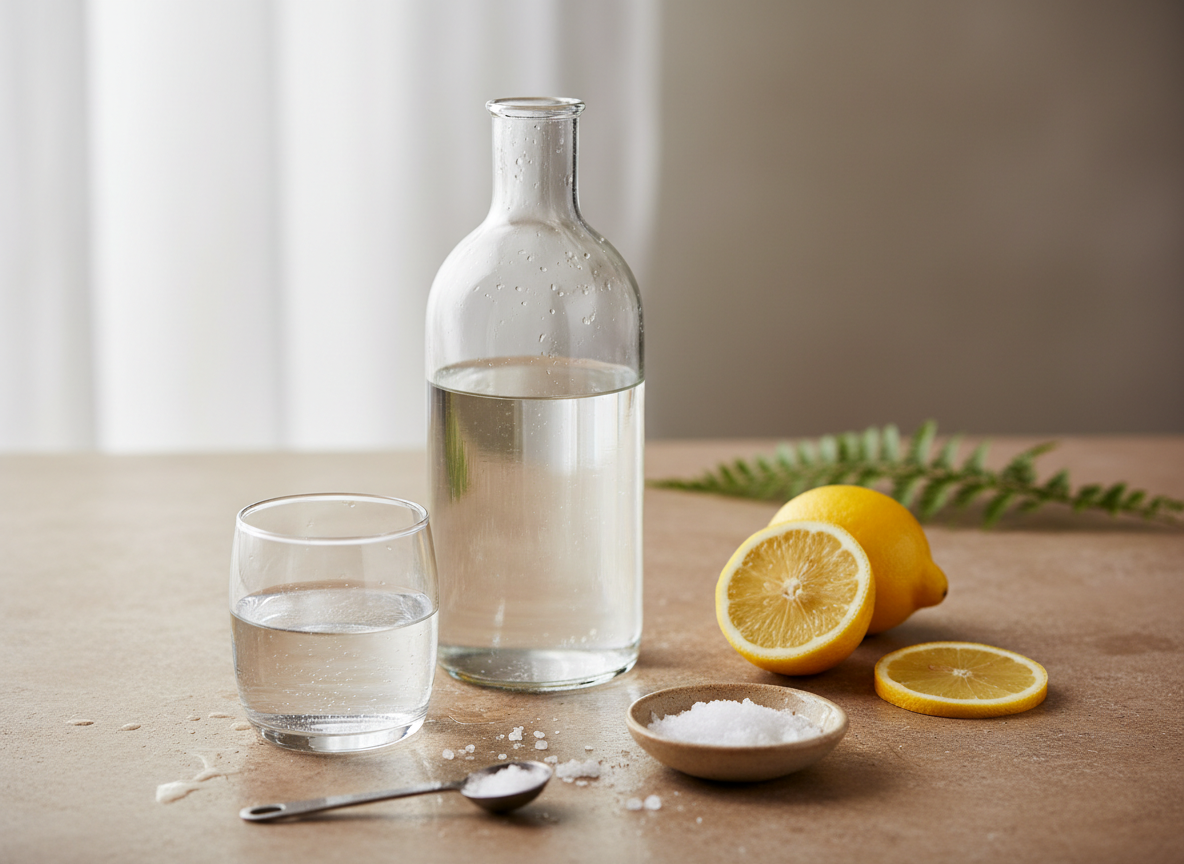
Basic 1-Liter Mix
- 1 liter (about 34 ounces) water
- 1/4 teaspoon table salt or sea salt
- Fresh lemon or lime juice to taste, optional
- Ice, optional
A level 1/4 teaspoon of ordinary table salt contains roughly 575 mg of sodium, although crystal size and salt type can change the amount that fits in a teaspoon. If precision matters, use the sodium value on the label rather than assuming every salt measures identically.
This is intentionally simple. The CDC Yellow Book describes a simple salt solution for heat exhaustion using roughly 1/4 to 1/2 teaspoon of table salt per liter of water, while also noting that plain water plus salty food can work just as well in many circumstances. The lower end makes a reasonable starting point for a mild homemade drink when extra sodium is actually warranted.
The lemon or lime is mainly there for flavor. It contributes small amounts of nutrients, but it should not be sold as the ingredient that transforms water into a superior hydration formula. The useful part of this recipe is much less glamorous: fluid plus a measured amount of sodium.
Why Potassium Deserves More Caution
Potassium is essential for normal nerve transmission, muscle contraction, kidney function, and fluid balance. The NIH Office of Dietary Supplements lists an Adequate Intake of 3,400 mg per day for adult men and 2,600 mg for adult women, with food sources such as potatoes, beans, lentils, leafy greens, fruit, dairy, fish, and other whole foods contributing substantially.
That does not mean everyone should start measuring potassium chloride into a water bottle. Supplemental potassium can become dangerous when kidney function is impaired or when medications reduce potassium excretion. ACE inhibitors, angiotensin-receptor blockers, and potassium-sparing diuretics are among the situations where extra potassium deserves particular attention.
For a general-purpose homemade drink, the safer default is therefore not to prescribe a universal spoonful of potassium salt. Get potassium primarily from food unless there is a specific reason to supplement it and you know that the amount fits your health situation. Readers who want the deeper nutrient discussion can see Potassium: The Mineral Most Americans Are Dangerously Deficient In.
Why Magnesium Is Optional, Not Mandatory
Magnesium belongs in the broader electrolyte conversation, but it does not need to be in every bottle. It can be obtained through food and, when appropriate, a separate supplement whose dose and form are easier to control. Adding magnesium to hydration products is often as much a product-design decision as a hydration necessity.
If you already use magnesium separately, there is little reason to assume your water also needs it. The larger principle is the same one I apply to supplement stacks: add something because it serves a defined purpose, not because a more complicated formula looks more complete.
Sugar-Free Electrolytes Are Not Medical ORS
This distinction is important enough to make explicit. A sugar-free homemade electrolyte drink is not a substitute for oral rehydration solution (ORS) when someone has clinically meaningful dehydration from diarrhea or vomiting.
WHO oral rehydration solution is deliberately formulated with glucose and specific amounts of sodium, potassium, chloride, and citrate. The World Health Organization describes ORS as a glucose-electrolyte solution designed to prevent or treat dehydration from diarrheal disease. The glucose is not an unnecessary sweetener; sodium and glucose transport in the intestine is part of why ORS works.
So “without sugar” can be a perfectly reasonable goal for routine hydration. It is the wrong goal if you are trying to recreate medical ORS. Significant dehydration, persistent vomiting or diarrhea, confusion, fainting, inability to keep fluids down, or other signs of serious illness warrant medical assessment rather than increasingly elaborate kitchen chemistry.
Homemade vs. Commercial Electrolytes
Commercial electrolyte products are not inherently better or worse than homemade versions. They buy you convenience, consistent measurement, portability, flavor, and—in some products—a sodium dose designed for substantial sweat losses. Those are legitimate advantages. They can also cost far more per serving and may include ingredients you neither need nor want.
| Type | Best fit | Main advantage | Main limitation |
|---|---|---|---|
| Plain water | Normal daily hydration; shorter activity | Simple, inexpensive, usually sufficient | Does not replace meaningful sodium losses by itself |
| Homemade water + measured salt | Heat, longer walks/workouts, moderate sweating when extra sodium is useful | Cheap, adjustable, no added sugar required | Less precise than a standardized product; easy to overdo if measuring casually |
| Low- or no-sugar commercial electrolyte | Convenience and predictable dosing | Portable and consistent | Cost; sodium and ingredient profiles vary widely |
| High-sodium endurance formula | Long-duration or high-sweat situations when losses justify it | Delivers substantial sodium conveniently | Often unnecessary for ordinary daily use |
| Medical ORS | Dehydration from gastrointestinal fluid loss when appropriate | Purpose-built glucose-electrolyte formulation | Not simply a sugar-free wellness drink |
If you buy a product, read the sodium amount per serving first. Then look at potassium, magnesium, sugar or carbohydrate, sweeteners, serving size, and how many servings the manufacturer expects you to put into a bottle. “Electrolytes” on the front of a package tells you almost nothing about whether the formula matches your actual needs.
How to Adjust the Mix to the Situation
Start with the situation rather than a fixed daily ritual. On an ordinary day with regular meals and no heavy sweating, plain water may be all you need. During a longer walk, workout, or hot day with meaningful sweating, the basic salted-water mix can make more sense. For prolonged heavy sweating, individual needs vary enough that sweat rate, diet, climate, acclimatization, and personal tolerance become more useful than a universal internet recipe.
People with heart failure, significant kidney disease, uncontrolled hypertension, a prescribed sodium restriction, a history of abnormal sodium or potassium, or medications that materially affect fluid and electrolyte balance should not treat a homemade electrolyte recipe as generic advice. Their safe target can be very different from that of a healthy person replacing sweat losses.
And remember that more fluid is not always safer. If you are exercising for long periods, drinking enough to gain body weight during the activity is a warning sign that intake may be outrunning losses. Hydration should replace what the body is losing, not become a contest to see how much water you can finish.
Bottom Line
Most people do not need a complicated electrolyte formula every time they drink water. For routine hydration, water and a nutrient-dense diet remain the foundation. When sweating, heat, or another real source of fluid loss increases sodium needs, a simple homemade drink can do the job without turning hydration into another supplement stack.
The practical starting point is straightforward: one liter of water with about 1/4 teaspoon of salt, flavored with lemon or lime if you like it. Treat potassium more carefully, get it primarily from food unless supplementation is appropriate for you, and do not assume magnesium has to ride along in the same bottle.
Most importantly, use the right tool for the right problem. A sugar-free electrolyte drink can support routine hydration. It is not the same as medical ORS, and it should not be presented as one.
Explore Electrolyte & Mineral Recommendations
Looking for practical options? See my current electrolyte and mineral recommendations, including sugar-free choices and ingredients for a simple homemade approach.
Related Reading
- Why Salt Isn’t Bad for You: The Real Story About Electrolyte Balance
- Potassium: The Mineral Most Americans Are Dangerously Deficient In
- Magnesium: The Invisible Deficiency Behind Anxiety, Migraines, and Poor Sleep
Sources & Further Reading
- CDC/NIOSH — Workplace Recommendations: Heat Stress and Hydration
- CDC Yellow Book — Heat and Cold Illness in Travelers
- National Athletic Trainers’ Association Position Statement — Fluid Replacement for the Physically Active
- Sodium Intake for Athletes Before, During and After Exercise: Review and Recommendations
- NIH Office of Dietary Supplements — Potassium Fact Sheet for Health Professionals
- World Health Organization — Oral Rehydration Salts
Disclaimer
Content on Real David Julian is provided for educational and informational purposes and may include research-based discussion, personal experience, and opinion. It is not medical advice and is not a substitute for individualized care from a qualified healthcare professional. Always discuss your specific health needs, diagnoses, medications, supplements, treatments, or major health decisions with an appropriate healthcare professional. See the full Disclaimer for additional information.