
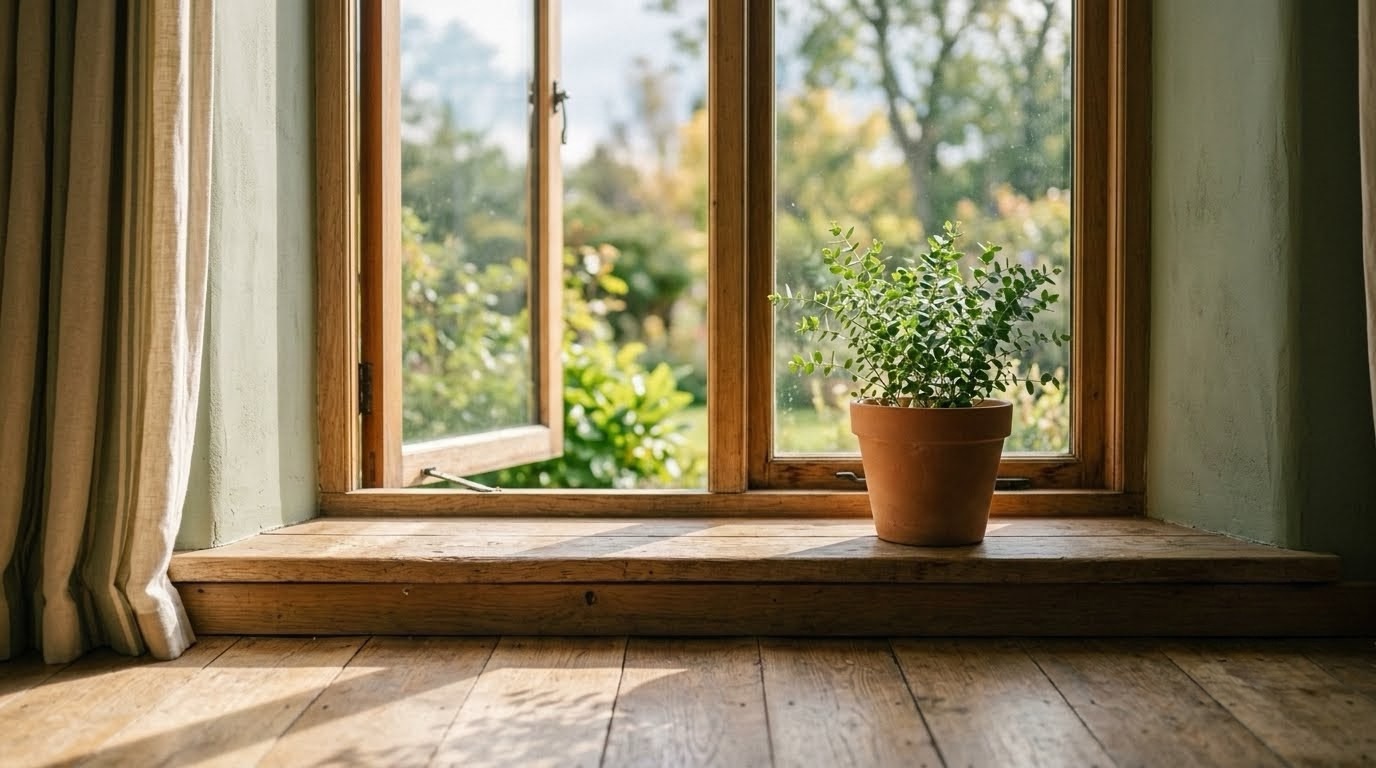
Years spent living in ways nearly unrecognizable to any previous generation — indoors, under artificial light, largely disconnected from anything not built or manufactured. All of it entirely ordinary by modern standards. None of it particularly remarkable to anyone living through it. That’s exactly what makes it worth a second look — the same kind of quiet drift explored in why isolation sometimes gets dressed up as capability, just showing up in a different area of daily life.
Your Body Was Calibrated for Inputs It May Not Be Getting
This isn’t a romanticized case for a simpler past. Some parts of the argument are much better established than others. Light exposure across the day is a powerful environmental signal for the human circadian system, and regular movement is foundational to health. Temperature variation, seasonal rhythms, and broader contact with natural environments are interesting parts of the picture too, but the evidence is not equally strong for every proposed “natural input.” The clearest place to start is light.
Light is the clearest example because its effects on human circadian timing are measurable and supported by decades of research. The light-dark cycle is a major signal that synchronizes the circadian system to the 24-hour day, and the biological effect of light depends on timing, intensity, duration, and spectrum. Outdoor daylight can be dramatically brighter than typical indoor illumination, which helps explain why time spent outside can provide a very different light signal from spending the same period under ordinary room lighting. A controlled crossover study of daylight access at home found changes in circadian timing and sleep-related outcomes when participants received greater daylight exposure. That study is one piece of a much larger circadian-light literature rather than proof that one particular morning-light routine will produce the same result for everyone.
Nature Is Not a Luxury Input; It’s a Baseline One
Most conversations about wellness treat contact with nature as a nice-to-have supplement — something added after the “real” priorities are handled. I think that undersells it, but it helps to separate evidence from interpretation. Regular movement and an appropriate daily light-dark pattern are well-supported parts of human health and circadian biology. The broader idea that modern indoor living has removed other useful natural inputs is a reasonable framework to explore, not a single established medical finding. For NVA, the practical point is simpler: before adding another wellness product, look at whether ordinary parts of daily life — daylight, movement, time outdoors, and a consistent day-night rhythm — have been crowded out.
Small Reconnections, Not Wilderness Retreats
Affiliate disclosure: As an Amazon Associate I earn from qualifying purchases. See the Affiliate Disclosure for details.
🛒 Shop This Category
Small tools that make it easier to close the gap — a simple morning light timer, basic outdoor gear, nothing elaborate.
None of this requires a dramatic lifestyle overhaul or a move to somewhere rural. Morning light before screens. A walk somewhere with actual daylight and open sky. Time outdoors when conditions are safe and comfortable, rather than treating temperature variation itself as a therapy. These are small, ordinary adjustments — not a rejection of modern life, and not an argument against the conveniences that make daily function easier for people managing real physical limitations.
The Bottom Line
The strongest case here is not that everyone needs a prescribed dose of “nature.” It is that modern indoor life can make it surprisingly easy to spend days with weak daytime light, too little movement, and very little time outside. Reconnecting with those basics does not require a wilderness retreat or another optimization project. Start with what is well supported — daylight at appropriate times, regular movement, and a consistent day-night rhythm — and treat the broader benefits of nature as something worth enjoying and studying without turning them into promises the evidence cannot yet carry.
Read the Full Story
This post touches one chapter. The fuller argument is in You Do You.
Sources & Further Reading
Disclaimer
Content on Natural Vitality Advocate is provided for educational and informational purposes and may include research-based discussion, personal experience, and opinion. It is not medical advice and is not a substitute for individualized care from a qualified healthcare professional. Always discuss your specific health needs, diagnoses, medications, supplements, treatments, or major health decisions with an appropriate healthcare professional. See the full Disclaimer for additional information.