
Psalm 90 is a prayer attributed to Moses, and it begins with a perspective we rarely hold for long. Before the mountains existed, God was God. Human life, by contrast, passes quickly. Generations come and go, and even the years that seem substantial to us are brief when measured against eternity.
That contrast is not offered simply to make us feel small. Moses is praying about what it means to live as mortal people before an everlasting God. He speaks candidly about human frailty, sin, and judgment. Then, in verse 12, he makes a request that belongs at the center of an ordinary life:
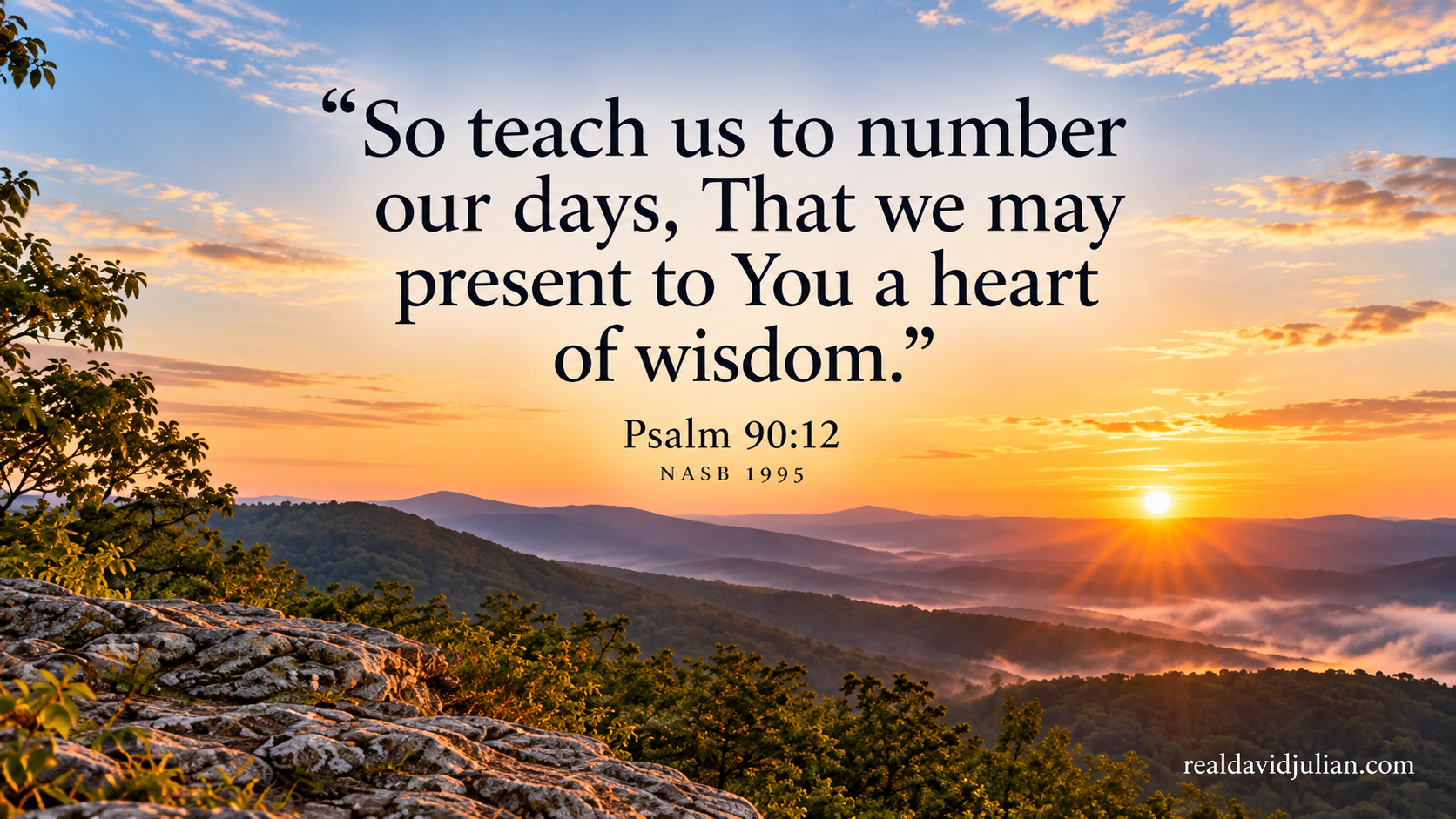
“So teach us to number our days, That we may present to You a heart of wisdom.” — Psalm 90:12 (NASB 1995)
What It Means to Number Our Days
Numbering our days is more than counting birthdays or acknowledging that life eventually ends. Moses asks God to teach him and his people to understand their days in a way that produces wisdom. Time is limited, but knowing that fact does not automatically make a person wise. We can recognize how quickly life passes and still spend years on things that do not deserve our attention.
The prayer is therefore about learning to see life truthfully. We do not control how many days we will receive. We cannot recover a day once it has passed. We also cannot judge a day’s worth solely by how much we accomplished during it. Wisdom begins with recognizing our dependence on God and allowing that recognition to shape what we value and how we live.
The surrounding psalm prevents us from turning this into a simple productivity lesson. Moses does not say that the answer to mortality is to work harder, fill every hour, or leave an impressive record. He asks for God’s compassion and steadfast love. He asks that God’s people experience gladness after affliction. Near the end, he prays that God would establish the work of their hands. Human work matters, but it remains dependent on God.
Living With a Different Sense of Priority
Most of us know the difference between what is urgent and what is important, yet urgency often wins. A problem demands an answer. A schedule fills up. An argument consumes our thoughts. We may spend an entire day responding to what presses on us without giving much consideration to what deserves our attention.
Psalm 90:12 challenges that pattern. If our days are numbered, our choices matter. How we speak to people matters. Whether we tell the truth when it costs us something matters. So do forgiveness, generosity, prayer, and the quiet responsibilities that receive little recognition.
This does not mean every day must contain a major spiritual achievement. Some days are taken up with illness, grief, care for another person, or work that seems repetitive. The value of a life is not measured by visible output. Moses is asking for wisdom in the days we actually have, including days when our options are limited.
There is a practical humility in this prayer. We can make plans, take responsibility, and pursue worthwhile goals without pretending we control the outcome. We can work diligently while admitting that our efforts need God’s favor. We can take the future seriously without living as though tomorrow has been guaranteed.
A Prayer That Changes the Present
It is easy to read a passage about the brevity of life and think only about the distant end. But Moses brings the question into the present: What kind of heart are we developing now? What are our daily habits teaching us to love? What have we been postponing that deserves attention while there is still time?
The request is addressed to God because wisdom is not merely the result of better planning. We need correction when our priorities drift. We need humility when we assume that our perspective is complete. We need the willingness to change course when the way we spend our time no longer reflects what we claim to believe.
Psalm 90 does not promise that wise choices will spare us suffering or give us a long life. It gives us something more sober and useful: a reason to ask God to teach us how to live faithfully within our limits. The days are finite. They are also real opportunities to love, obey, serve, and seek Him.
Reflection
If the way you spent this past week revealed your deepest priorities, what would it say—and what might need to change?
Prayer
Lord, teach me to see my days clearly. Forgive me for the ways I waste attention on what matters little while neglecting what matters most. Give me wisdom to recognize my responsibilities, courage to make needed changes, and humility about what I cannot control. Help me treat people well, do honest work, and remember that my time belongs to You. Amen.